
Air Fryer vs Convection Oven: What’s the Difference?
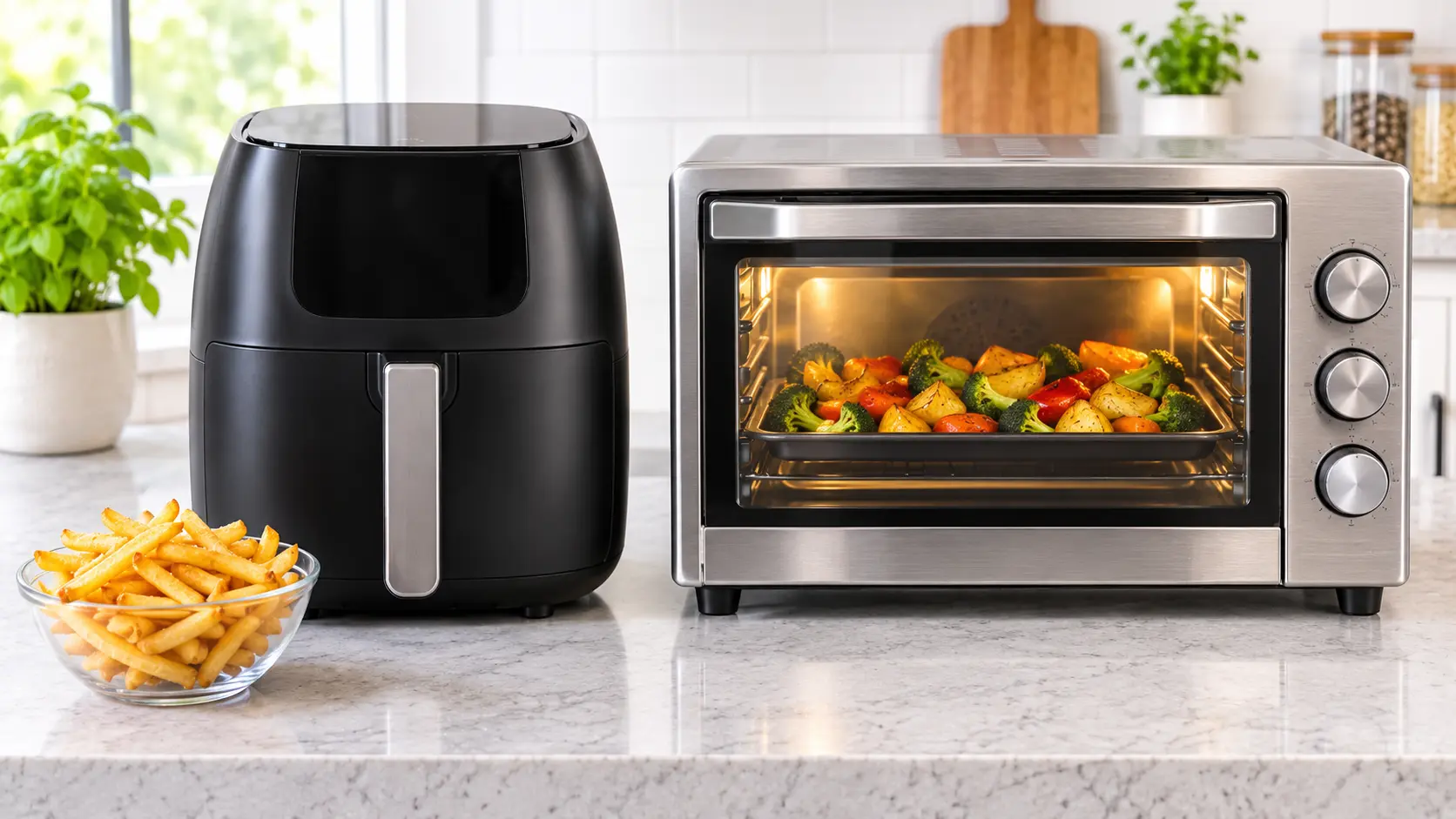
Air fryer vs convection oven – which one do you actually need? Both cook food with hot, moving air, so they work in a similar way. The big differences are size, speed and how crispy your food gets. An air fryer is smaller, heats up faster and makes food crispier. A convection oven holds much more food and can bake, roast and toast in bigger batches.
In this guide, we compare them side by side so you can decide which one fits your kitchen, your family size and the way you cook.
Table of Contents
Air Fryer vs Convection Oven: How Each One Works
A convection oven is an oven with a fan and exhaust that blow hot air around the food. This moving air cooks food more evenly and a little faster than a regular oven. You can find convection in full-size wall ovens, ranges, and smaller countertop convection ovens.
An air fryer is basically a small, powerful countertop convection oven. The heating element sits close to the food, and a strong fan pushes hot air quickly around a small basket with holes. Because the space is small and the air moves fast, food gets crispy on the outside – similar to deep frying, but with little or no oil.
7 Key Differences Between an Air Fryer and a Convection Oven
| Feature | Air fryer | Convection oven |
|---|---|---|
| Size and capacity | Small; best for 1–4 servings | Large; cooks full trays and whole meals |
| Preheat time | Very fast, often 2–5 minutes or none | Slower, especially full-size ovens |
| Cooking speed | Faster for small portions | Faster than a regular oven, slower than an air fryer |
| Crispiness | Very crispy results | Golden and even, but less crispy |
| Energy use | Low for small meals | Higher, but efficient for big batches |
| Versatility | Frying, roasting, reheating | Baking, roasting, toasting, big batches |
| Counter space | Compact, but sits on the counter | Countertop models are bulky; built-in models use no counter space |
1. Size and capacity
This is the biggest difference. Most air fryers hold enough for one to four people. A convection oven can cook a whole tray of cookies, a full chicken or several dishes at once. If you cook for a large family, a convection oven usually wins.
2. Preheat time and speed
Air fryers heat up in just a few minutes because the cooking space is small. For a quick snack or a small dinner, an air fryer is usually faster from start to finish.
3. Crispiness
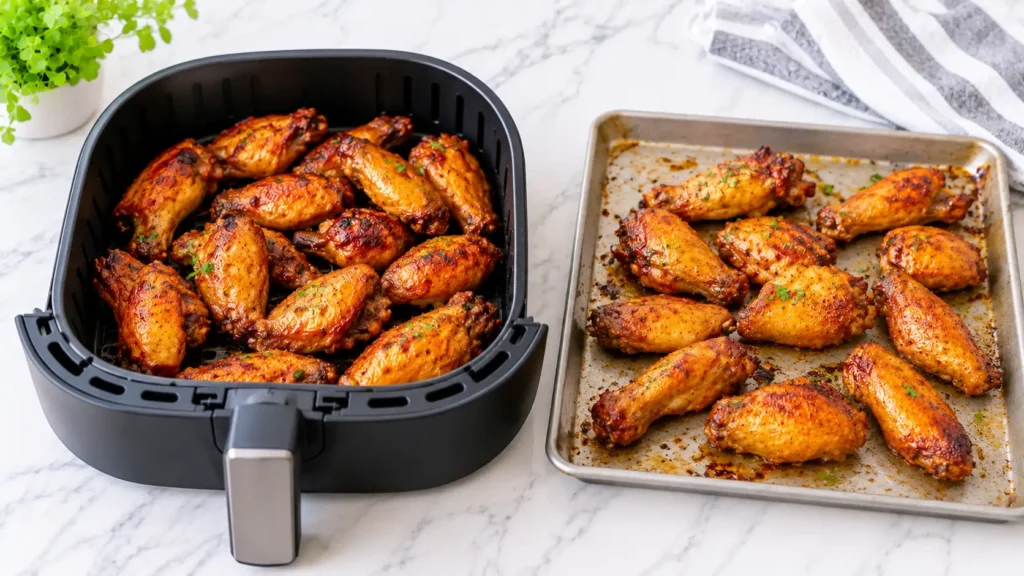
Air fryers are designed for crispiness. The strong fan and perforated basket let hot air reach every side of the food. Fries, wings and breaded foods come out crunchier than in most convection ovens.
4. Energy use
Small appliances generally use less energy for small meals because there is less space to heat. According to the U.S. Department of Energy, small convection ovens and toaster ovens use about one-third to one-half as much energy as a full-sized oven. An air fryer, with its even smaller chamber and short cooking times, is a good energy-saving choice for small portions.
5. Versatility
Convection ovens are better for baking cakes, bread, casseroles and large roasts. Air fryers are best for crispy foods, reheating leftovers and quick weeknight meals.
6. Noise
Air fryers have a strong fan, so they are usually a bit louder. Full-size convection ovens are quieter.
7. Cleaning
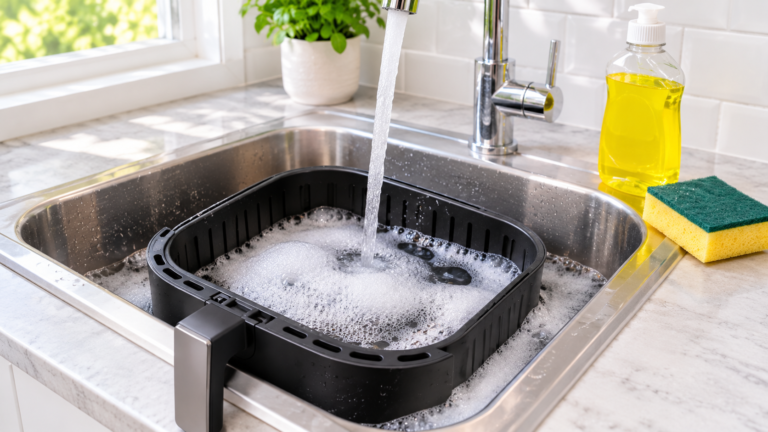
An air fryer basket is small and easy to wash in the sink. A convection oven has more space to wipe down, but no basket holes to scrub. Need help? See our guide on how to clean an air fryer basket without scratching it.
Pros and Cons of an Air Fryer
Pros:
- Very crispy food with little or no oil
- Heats up and cooks quickly
- Energy-efficient for small meals
- Compact and easy to clean
Cons:
- Small capacity – you may need to cook in batches
- Not ideal for large baking jobs
- Fan can be noisy
Pros and Cons of a Convection Oven
Pros:
- Large capacity for families and meal prep
- Great for baking, roasting and toasting
- Even cooking across multiple racks
- Built-in models save counter space
Cons:
- Longer preheat time
- Less crispy than an air fryer
- Uses more energy for small portions
Which One Should You Buy?
Choose an air fryer if:
- You cook for 1–4 people
- You love crispy foods like fries, wings and nuggets
- You want fast weeknight meals with little preheating
- You want to save energy on small meals
See our picks for the best air fryer for 2 people.
Choose a convection oven if:
- You cook for a big family or batch-cook meals
- You bake often – bread, cakes, cookies
- You roast whole chickens or large cuts of meat
- You want one appliance that replaces your regular oven
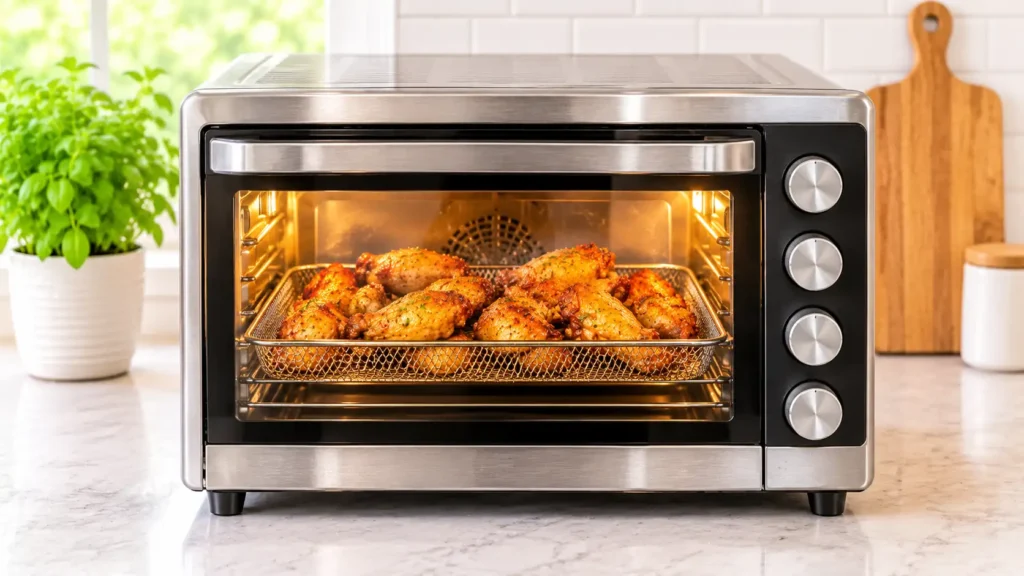
Can’t decide? Consider an air fryer toaster oven – a countertop convection oven with an air fry setting. It holds more food than a basket air fryer and makes food crispier than a standard convection oven, though it takes more counter space.
Can an Air Fryer Replace a Convection Oven?
For small households, an air fryer can replace an oven for most everyday cooking. But if you bake a lot or cook large meals, you will still want an oven. Many people keep both: the air fryer for quick, crispy food, and the oven for baking and big batches.
FAQs
Q1: Is an air fryer just a small convection oven?
A: Mostly, yes. An air fryer uses the same idea – a fan blowing hot air – but in a smaller space with a stronger fan, so food cooks faster and gets crispier.
Q2: Can I use air fryer recipes in a convection oven?
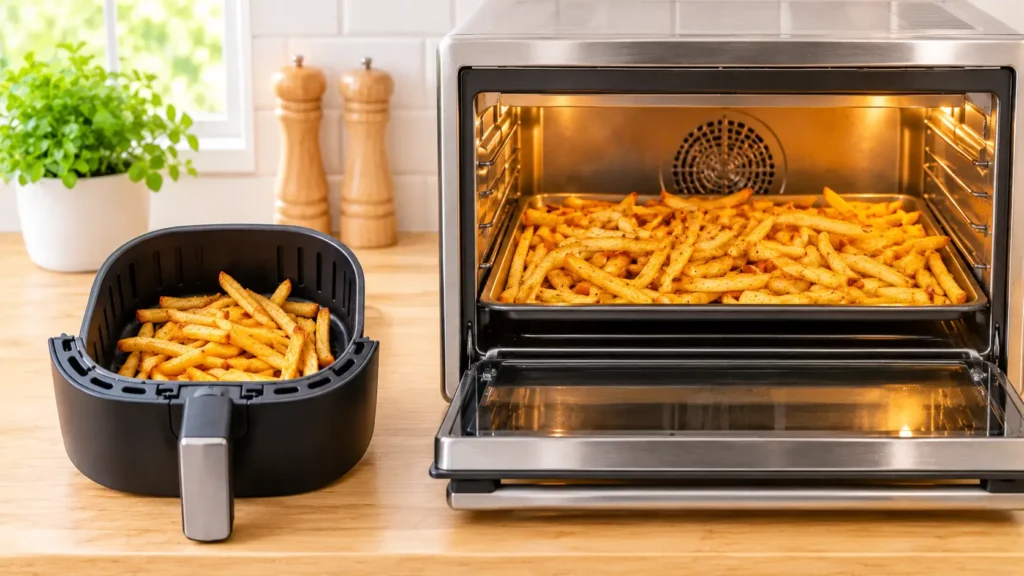
A: Yes, but food may take a few minutes longer and come out a little less crispy. Use a wire rack on a baking sheet so air can reach all sides.
Q3: Which uses less electricity, an air fryer or a convection oven?
A: For small meals, an air fryer usually uses less electricity because it heats a smaller space and cooks faster. For large batches, a convection oven can be more efficient than cooking several rounds in an air fryer.
Q4: Is food from an air fryer healthier than from a convection oven?
A: Both use little oil, so the results are similar. Air fryers simply make it easier to get a crispy, “fried” texture without deep frying.
Q5: Do I need to convert cooking times from oven to air fryer?
A: Yes. As a general rule, lower the temperature by about 25°F (15°C) and check the food earlier, since air fryers cook faster than ovens.
The Bottom Line
When it comes to air fryer vs convection oven, there is no single winner. An air fryer is the better pick for small portions, speed and maximum crispiness. A convection oven is better for big families, baking and large meals. Think about how many people you cook for and what you cook most often, and the right choice becomes clear.
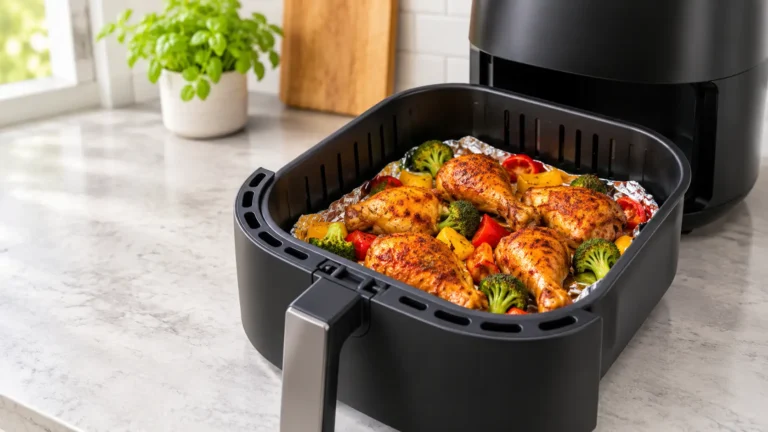
Using an air fryer already? Learn whether you can put aluminum foil in an air fryer, or explore more Kitchen Appliances guides.
2 Comments